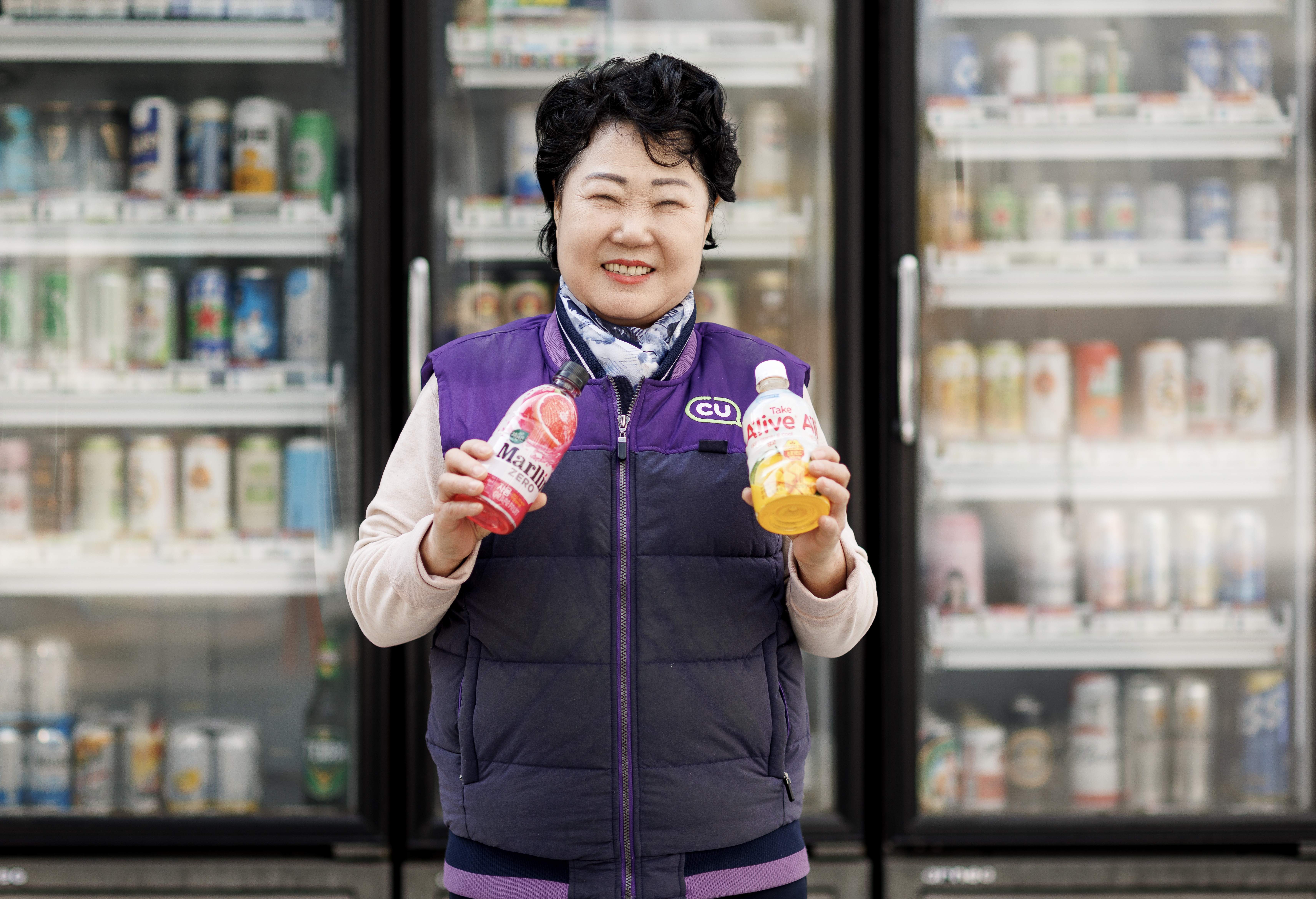
I Live with the Spirit of Having Crossed the Dumangang River
Love is conveyed through the heart. At her store next to a school, Kim Gyeong-suk willingly becomes a grandmother or a mother. At other times, like an after-school teacher, she listens to the children's joys and sorrows. The handwritten letters they have given her, filled with affection, are proudly displayed inside the shop. "Thank you, CU Grandma"-their crooked little letters are her treasures beyond measure.
For this year's Lunar New Year, Kim Gyeong-suk received a box of red ginseng with handwritten note that read, "Happy New Year, CU Grandma. From Kwon Tae-hwan and his four siblings." It was a gift of gratitude from a family with five children who were regulars to the store. When the kidscame in carrying the box, she was both touched and a little sorry. Their frequent visits had made them drear to her, and she had always treated them with sincerity-calling each of them by name and complimenting them everytime they walked in holding their mother's hand. She thought of them like her own grandchildren, so the gife came as a heartfelt and unexpected surprise.
Kim set foot on Korean soil in September 2019. Having spent a long time in China, she carried a heart-wrenching story. Over 20 years ago, she crossed the Dumangang River hand in hand with her teenage daughter-only to lose her in Yabian. Her daughter vanished without a trace, like water seeping into sand. The sense of hoplessness deepened as the year went by. One day, a thought crossed her mind: 'What if my daughter hand gone to Korea?' She then made a bold decision. Upon arriving in Korea, the rist words she spoke were to aask about her daughter's whereabouts.
"I'm sorry, but your daughter did not come here," an official said gently. Her heart shattered. Though devastated, she did not give up and continued searching. Through a North Korean defector community, she found and acquaintance who had lived in the same village in China as her daughter. With their help, young girl was now a mother of two. How could words capture what she felt? For someone who had endured a life full of hardship, it was nother short of a miracle granted by heaven.
In February 2022, Kim hoped to open a restaurant, drawing on her work exprience in China. But social distancing measures brought on by COVID-19 shook her confidence. At a friend's suggesion, she decided to open a branch of CU, a convenience store, instead.
For Kim, who shared warmth and kindness with her neighbors, every customer is both a friend and family.
"They say ignorance can make you bold-but I opened the shop without ever having stepped into a convenience store before. That's the spirit of crossing the Dumangang River."
At the headquarters, she received a week of training, but a lot of the terms were foreign to her. She could follow things visually, but the unfamiliar product names left her confused. Even after starting the job, she called her friend dozens of times every single day. Feeling sorry for asking so often, she began writing things down in a notebook. If she couldn't remember something right away, she would flip through it. No matter how many times she heard them, cigarette names just wouldn't stick. It took time to get used to the tricky foreign words. She fought through each day, relying on her wits and perseverance. For three months, she fumbled, unable to remember product names. She struggled with scanning barcodes and broke into a sweat in front of customers as she grappled with the checkout system. She had to memorize the names of over 10,000 items and learn where each one was located. Sometimes, unaware that she had already ordered a product, she would reorder it and be startled when the items arrived. Thankfully, customers usually knew what thery wanted and where it was. But when they inquired about newly released products, she often couldn't understand what they were looking for. So, she carried a notebook around and politely asked them to write down what they needed. "I'm from North Korea," she'd say. "I don't know much yet, so please help me." Her honest words were met with warm smiles.
Peolple often say that part-time staff are crucial in running a convenience store. When they didn't follow the first-in, first-out rule or failed to keep things tidy, Kim was left in a difficult spot. After many rounds of trial and error, she now works with a tudent from Uzbekistan, who whas been with her for just over two years. She extends care in many ways to her foreign friend, having experienced the hardships of living far from home herself. Since he dosen't eat pork, she cooks chicken for him along with some side dishes. She works from 5 a.m. to 8 p.m., spending 15 hours day at the store.
Her first store was located in a residential area surrounded by apartment buildings. With a school and private academies nearby, it seemed like promising location. But once she started working, things didn't go as expected. When a competing covenience store and a stationery shop opende right next door, her sales steadily declined. Unable to settle for just on store, she decided to open a second location. The combinded slase from both shops mad things noticeably better.
The Owner with a Distinct Accent
Kim still remembers the helping hands she received along the way. She recalls the faces of those who rolled up their sleeves to help her stock the shelves when she was just starting ourt. There was someone who brought her beef bone soup, and an older sister-like lady who always saved a portion of kimchi just for her. Even a child once said, "Ma'am, you've settled in will," after hearing she was from North Korea. Customers became like older sisters and friendly neighbors. HEr customer service strategy is sincerity. She always opens her heart first and approaches people with kindness. When kids, upon first meeting her, would says, "Ma'am, your way of speaking sounds funny-is that a dialect?" she would gather them and explain: "I'm from North Korea. This is the standard language of the North."
A woman from Gangwon-do Province once said she found Kim's so-called "standard speech" easier to understand than her mother-in-law's dialect. Running a storetucked between rows of high-rise apartment buildings, Kim has come to feel deeply connected to the community. One day, a customer who had taken an item while she was briefly away came back the next day to apologize. "Ma'am, I took a bottle of beer yesterday while you were out. I was in a rush and couldn't wait. But is it really okay to just leave the store like that?" To this, Kim replied, "How could I run a business in the neighborhood without that level of trust? If you're in a hurry, of course you should take what you need."
And a child once came back holding a small item she had given and said, "I only paid for two." Kim felt so proud of their honesty that she would call them by name with affection. Whether it is and elderly, a local resident, or a regular customer, she is generous to everyone. One day, a woman she met in front of the recycling station said, "My grandchild came home bragging that you treated him so well." Seeing herself through the innocent eyes of the child, Kim realized she had grown from a newcomer in Korea into a trusted neighborhood store owener.
A middle schooler with an item in his hand once said, "Have you eaten? It must be tough for you." She was struck by how polite the child was and thought, 'What wonderful parents they must have.' Her store is visited by people from age groups-children, young adults, and seniors-but to her, they are all her customers and friends. But it is the children that tug at ther heart the most. Some come asking for help opening a bottle cap or for a tissue. One even rushed in with a nosebleed. Every time she helps them, she feels quietly fulfilled as if she has become someone to rely on.
When a kid on their way to an after-school class asks, "Do you have any expired food? I don't have any money," she thinks of her son in North Korea. She can't bear to send them away empty-handed, so she searches the back room for something to give them. If they don't have bus fare, she hands them some coins. Kindness comes full circle. And sincerity-over time-shines like a gem. Kim's hope to increase her store's revenue is rooted in something deeper: a desire to support newcomers like herself and creat job opportunities. In early April, she plans to relocate one of her two shops and open a new one. After a long conversation, we left believing that her dream of achieving strong sales and giving back to society will one day come true.